

Wahala
Wahala (pronounced wah-HA-la) is a popular Nigerian slang, primarily from Yoruba and Hausa, meaning trouble, problem, difficulty, or hardship, also used to describe complicated situations.

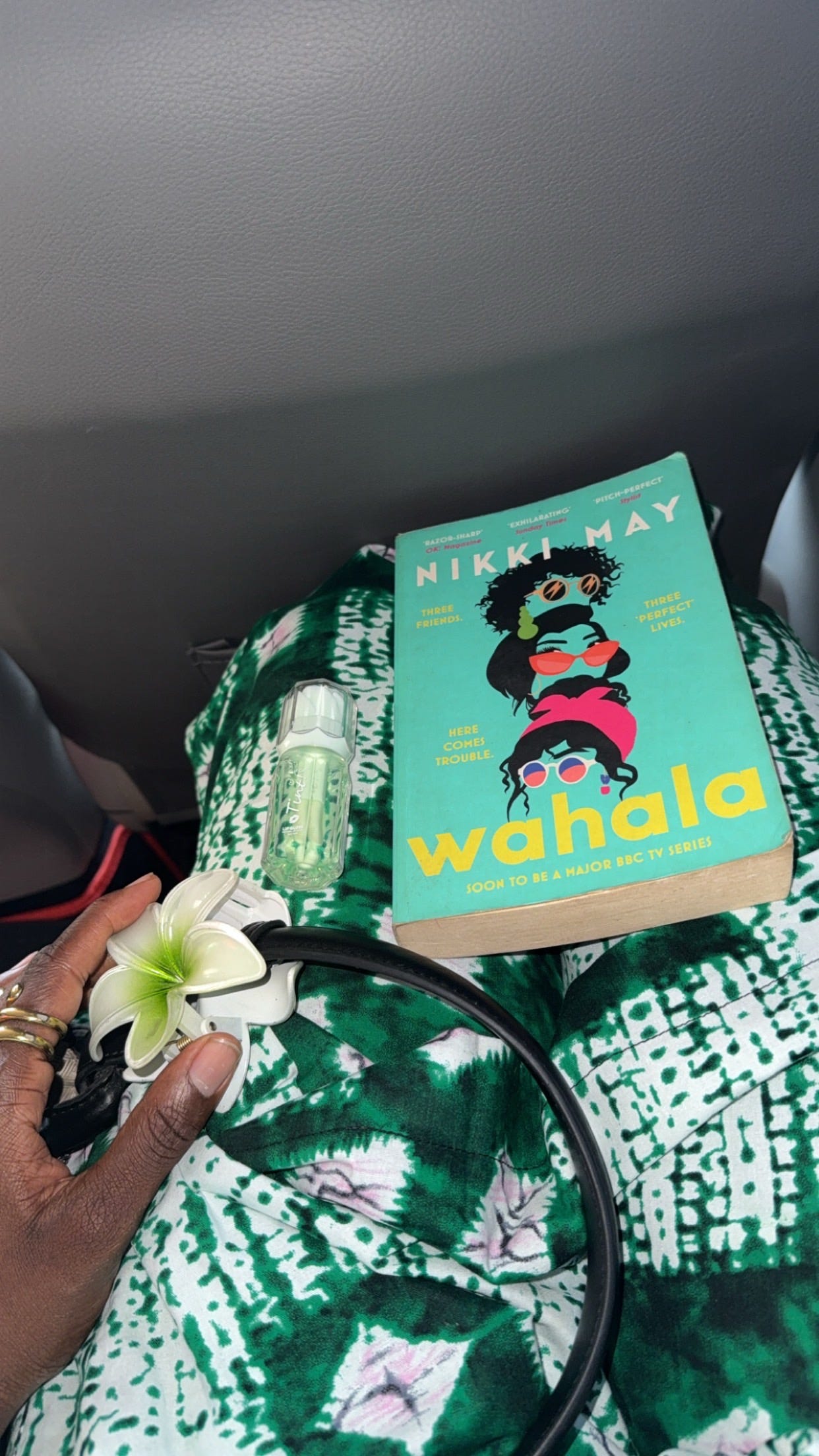
Nikki May is Anglo-Nigerian (simply put British Nigerian), a perfect mix of both worlds and this played a major role in the book.
Wahala tells the story of friendship, the ability to overlook faults and imperfections while loving the person because they are your friend(s). It goes on to talk about why, sometimes, it is better to leave ignore cracks than attempt to fix it.
Simi seems perfect at this; she lives a “perfect life”, married to the best man, has a great job and can easily switch accents. I liked how the writer points out that despite being a college dropout, Simi makes it big without a degree.
P. S. This is not a sign to drop out of college.
Ronke seems perfect but flawed by looking for her father in every men and relationships she finds herself. It’s a bit on the nose considering no one is perfect.
Boo—this actually suits her because she deserves to be booed at—feels unreal. It took cheating on her husband and him finding out to realize that she had the best thing ever: a French husband, an hybrid job, a cute (okay, I’ll admit she’s a tad very annoying) daughter and amazing friends.
It wasn’t enough that she cheated; she discussed her husband in a horrid manner with Iso calling him tubby hubby. Didier’s self worth was so battered that he began sleeping in clothes. Also everything revolves around her: doesn’t matter what it is.
I don’t think the problem started when Iso arrived. It had always been there; she just pointed them out, albeit not with the best of intentions, and definitely not in the best way. One thing I don’t understand is why she killed Kayode. Kayode was a mere casualty in the fight. Iso knew nothing would happen to her; her dad had done it before. It wasn’t something new or strange.
Call it sexual harassment and the police come running. Throw in a bit of self defense and voila, you are a victim of sexual harassment who, in the course of protecting yourself, “inadvertently” caused the death of your assailant.
If you ask me, I’d say that Iso had the stalker come to Ronke’s flat so it could be on record that Kayode was violent. It makes for the perfect getaway.
I don’t really like Mama T; expecting Simi to provide your needs excessive needs while not even attempting to fix her relationship with her father is shallow. Olu is shallower- sending your father to do your dirty work while berating the breadwinner simply because she didn’t graduate from college.
The bonus chapter (exclusive to the new publication) is a foreshadowing on how Iso found the girls on Facebook. I’ll concede this time that maybe African parents were right about how social media is doing more harm than good. The signs were there but everyone was self-absorbed (save Ronke) to see through Iso.
I’ll admit it’s a good book but it could be better. While exploring the themes of parental expectations, infidelity, relationships and love, a lot of questions were left unanswered - like did Boo reconcile with her father?
Maybe Nikki ran out of chapters in the end because it seemed rushed. I still don’t think Ronke should have met another person at the time she did. It’s a bit too early. There’s also the question of Martin and Simi’s relocation and family.
The book really is troubled.
For those who like to cook or want to try Nigerian jollof rice or moin-moin, Nikki added the recipes to the book. However, if you’re in Nigeria, the pepper doesn’t apply to you.